
How a Co-Living Team Used Airbtics to Research New Locations
Name changed. Based on customer correspondence and a product walkthrough.
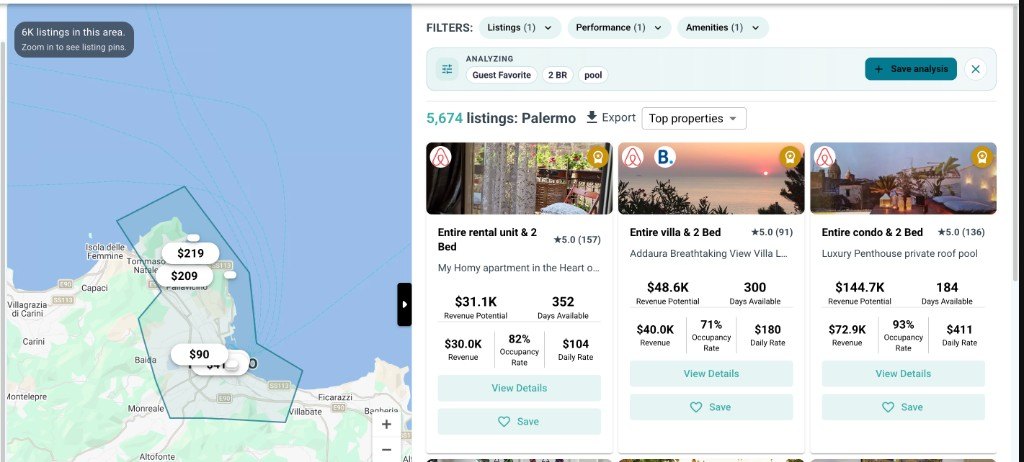
Oliver and his team needed two things in the same destination: interest from digital nomads and properties whose owners might welcome a longer-stay partnership.
Their business brought together accommodation, workspaces and community. Finding a suitable location meant understanding both the people who might stay there and the accommodation available to serve them.
The team used nomad platforms and Google Trends to investigate demand. Airbtics helped them examine the other side of the opportunity: local listings, neighbourhoods, occupancy and nightly prices.
Defining the right property for the business
The team researched guesthouses, hotels and larger villas offering private rooms. These properties could provide the accommodation and shared space needed for a co-living experience.
Their model also depended on finding owners open to arrangements that worked for longer stays.
A property already filling most of its rooms with short bookings could have little incentive to offer the discounts their model required. A property with unfilled rooms might be more interested in exploring a different arrangement.
That made occupancy a useful sourcing signal. The team wanted to understand where available accommodation could overlap with demand from their target guests.
Connecting destination research with neighbourhood data
A destination’s popularity with digital nomads was a starting point. The team still needed to investigate where within that destination a potential property partnership could make sense.
Airbtics supported this neighbourhood-level research. They could examine the accommodation in an area, look at occupancy and pricing, and narrow their investigation around properties relevant to their model.
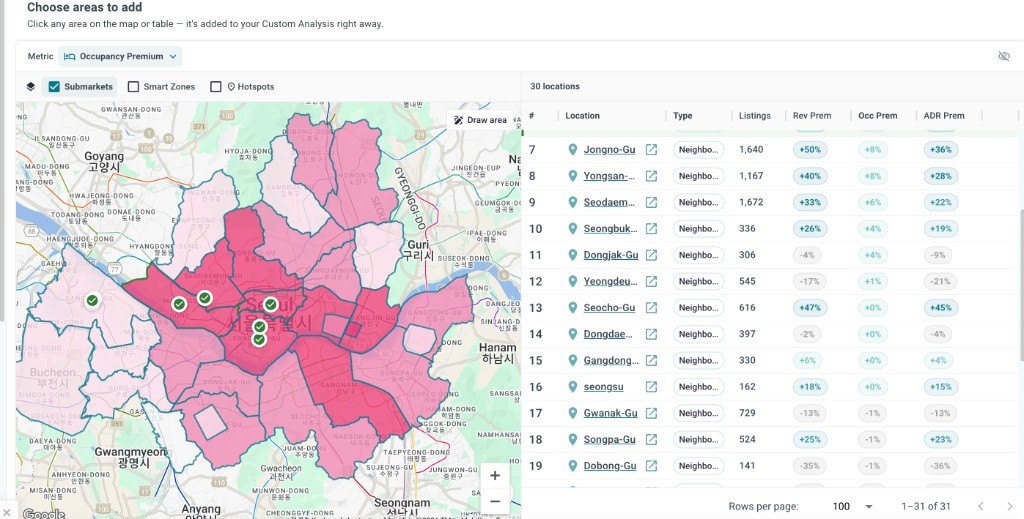
In April 2026, Oliver and his colleagues contacted Airbtics for help refining that process. They wanted guidance on which filters and data points would be most useful when comparing neighbourhoods.
The goal was to make their location research more closely reflect the type of business they were building.
Using occupancy to focus the search
During a workflow session with Airbtics founder Jae Seok An, the team explored sorting listings from lower to higher occupancy, then narrowing the results by price.
Occupancy below 50% was discussed as a starting point for investigating potential leads. For this team, the figure helped frame a sourcing question: might an owner with unused capacity be interested in a longer-stay partnership?
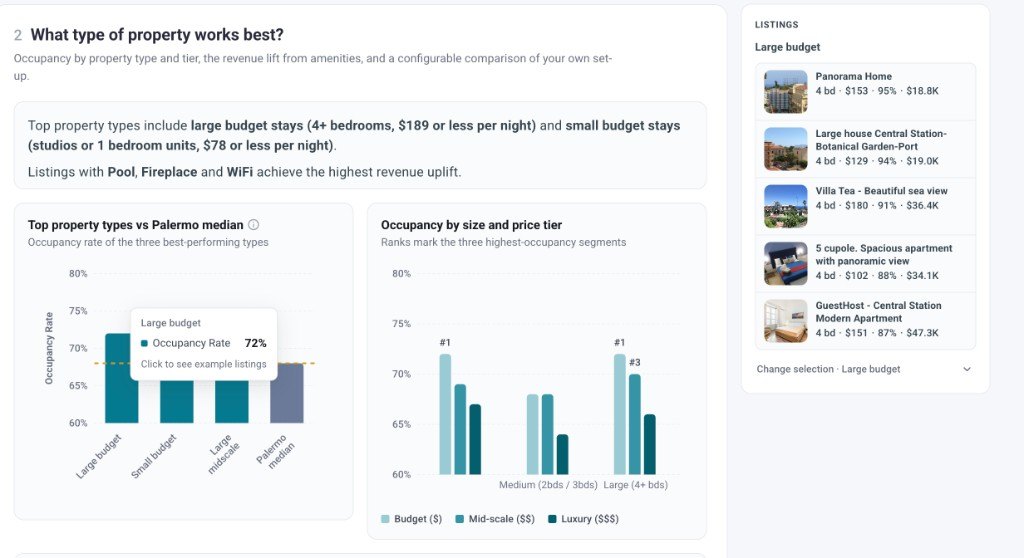
Pricing added another part of the assessment. Accommodation needed to fit the budget of their intended guests and leave room for a workable arrangement with the owner.
Together, these filters offered a way to investigate properties against the team’s operating requirements.
Choosing the comparison set carefully
The session also examined which property filters could provide useful context.
Some private-room searches returned limited data. The team explored using studios and one-bedroom listings as an additional view of local occupancy and pricing, alongside more specific property research.
They also discussed map-based analysis and custom areas to investigate neighbourhoods more closely.
This gave the team several ways to approach its research, depending on the accommodation available and the amount of data in each area.
Taking a more focused workflow into the next search
After the session, Oliver’s team reported that they understood the platform better and had gained useful tools for their market research.
Their next step was to test the refined filters across target areas and investigate individual properties.
The search now connected a destination, its neighbourhoods, the accommodation available and an owner’s potential interest in longer stays. Those were the questions the team could bring into its next round of property research and partnership conversations.