 Airbtics | Airbnb Analytics
Precise Short-term Rental Analytics
Airbtics | Airbnb AnalyticsIn recent years, Airbnb long-term rentals, also called Airbnb monthly rentals, have become a popular strategy for hosts and property investors looking to maximize occupancy and minimize turnover. Whether due to remote work, digital nomad lifestyles, or housing flexibility, more guests are seeking stays lasting a month or more.
For hosts and investors, this presents a powerful opportunity that comes with steady income, lower operational hassle, and access to a growing pool of medium- to long-term guests. But it also requires a different approach – one that balances pricing, legal considerations, and property suitability.
That’s where Airbtics comes in. With detailed market analytics and short-term rental regulations info, you can discover which markets are most profitable for long-term Airbnb stays, which property types perform best, and how seasonality, amenities, and reviews impact occupancy and revenue.
Key Takeaways:
Airbnb long-term rentals are listings that allow guests to book stays of 28 days or more. These properties cater to people looking for extended stays, such as remote workers, students, business travelers, families relocating, or digital nomads seeking temporary homes.
Airbnb itself promotes monthly stays under its Airbnb Monthly Stays section, which highlights properties that offer discounted rates for longer bookings. These listings often include features like fully equipped kitchens, laundry facilities, and home offices to make longer stays more comfortable.
So, what’s the difference between Airbnb monthly rentals and traditional long-term rentals?
The main difference between Airbnb long-term rentals and traditional monthly rentals is that Airbnb rentals come furnished with all essential furniture and appliances for a comfortable stay. Moreover, they focus on providing good guest experience and offer relevant services, such as cleaning, supplies restocking, and others.
Aside from Airbnb, other vacation rental websites also have similar offerings:
However, Airbnb remains the most flexible and globally recognized platform for both short-term and long-term stays, attracting a broad audience of travelers and remote professionals.
While short-term rentals continue to be a strong real estate investment strategy, extended stays are growing in demand and supply. Brian Chesky, Airbnb CEO, recently noted that long-term bookings now comprise 17-18% of all rentals through the platform, while they comprised 13-14% of reservations before the global pandemic.
The rise of ِِِAirbnb monthly rentals isn’t happening in isolation. It’s driven by a number of converging macro-trends that create demand for stays of 28 days or more.
Below are key factors worth highlighting:
These factors create a robust environment for hosts and investors interested in strategies for Airbnb for long-term rent, making the case that offering a property for 28+ day stays is not just a niche play, but a growing segment of the hospitality market.
If you’re considering hosting long-term stays on Airbnb, it’s a good idea to think about the pros and cons before making up your mind.
Let’s take a look at the most common benefits and drawbacks of this vacation rental investment strategy:
Opting for long-term Airbnb rentals can bring several advantages that appeal to property investors and hosts alike:
While profitable, Airbnb month-to-month rentals come with challenges hosts should consider:
The key to successful monthly Airbnb rental investments is to find the right balance that leverages the stability of long-term bookings without losing the flexibility and profitability of short-term hosting. The way to do this is with the use of the best vacation rental software tools.
Finding success with Airbnb for long-term rent isn’t just about listing a property – it’s about choosing the right market, the best property type, and the optimal amenities. Data-backed research is essential, and that’s where Airbtics becomes your best ally.
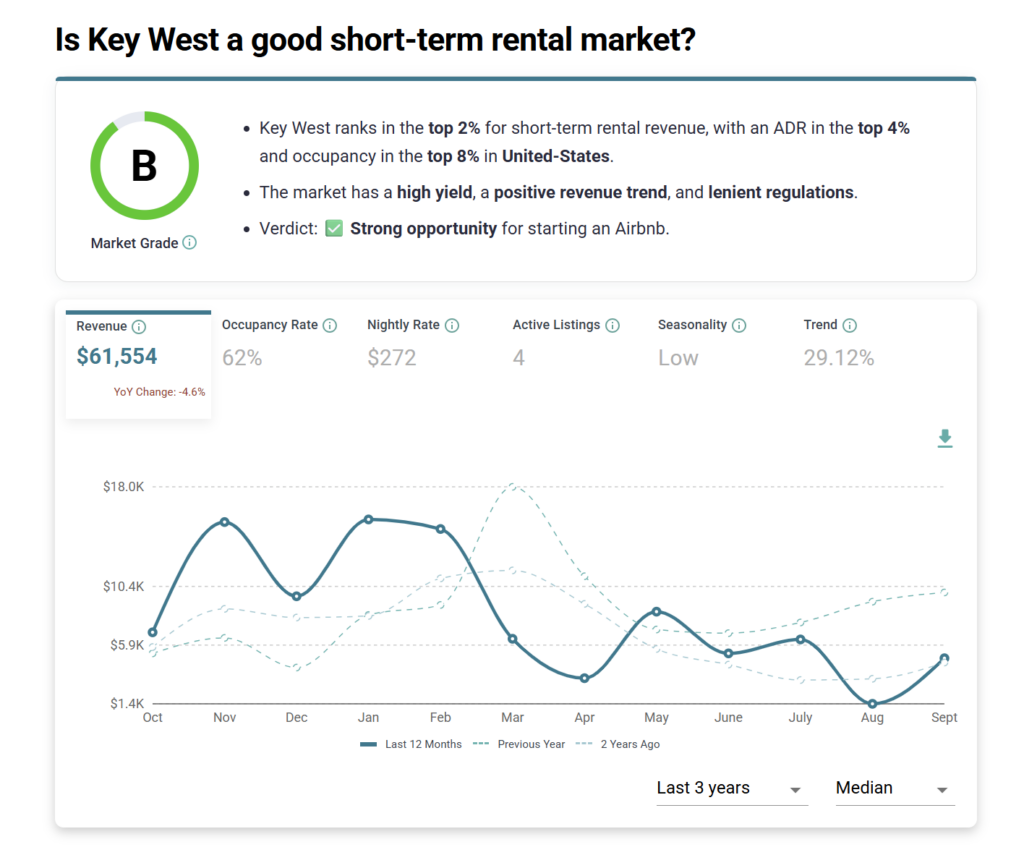
Start by analyzing potential markets with Airbtics’ Market ExplorerTool, which lets you investigate occupancy rates, average monthly revenue, and seasonality for different locations worldwide.
Simply set up the Minimum Stay filter to 28+ days to analyze the performance of Airbnb extended stays in the local market.
Airbtics Market Explorer: Key West, FL Airbnb Market, 28+ Day Stays, November 2025
Source: Airbtics app
You can:
For example, a market with high short-term demand but strong off-season dips might benefit from introducing Airbnb monthly rentals to maintain occupancy. Airbtics helps quantify this with historical and seasonal performance data.
You can further narrow down your market search by checking out the best areas for Airbnb properties in the city. Neighborhood-level Airbnb rental data is provided by Airbtics.
Airbtics Market Overview: Top Neighborhoods in the Key West, FL Airbnb Market, November 2025

Source: Airbtics app
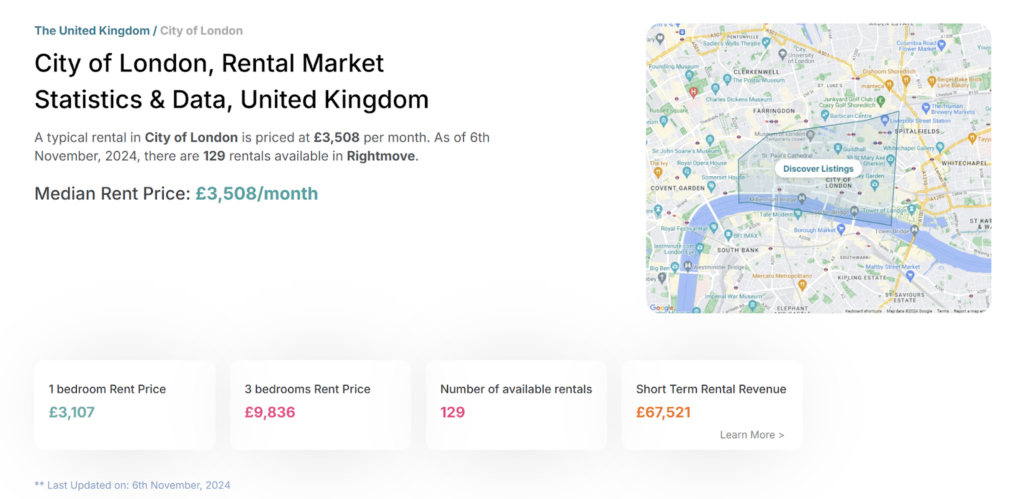
Moreover, the Airbtics app provides up-to-date data on the average rent in major global cities, which relates directly to monthly Airbnb rentals. You can see the average monthly rental income as well as the number of available rental properties as a measure of competition to assess whether a market offers good opportunities for long-term rental investments.
Airbtics Average Rent: London, UK Market, November 2025
Source: Airbtics app
Not all property types perform equally when listed for extended stays on the Airbnb platform. Using the Airbtics’ Market Overview Tool, you can filter by property type and property size (studio, 1BR, 2BR, etc.) to identify which formats generate the highest returns for Airbnb bookings.
Generally speaking:
Still, there are important regional differences, so it’s best to analyze the performance of your selected market to boost the performance of your Airbnb investment.
Airbtics’ property type breakdowns show average occupancy and monthly income per property category, so you can confidently choose the right investment.
Airbtics Market Overview: 2-Bedroom Performance in the Key West, FL Airbnb Market, November 2025

Source: Airbtics app
Airbtics provides detailed seasonality charts that highlight demand fluctuations. This helps investors understand how month-to-month Airbnb rentals can stabilize income during the low season.
For instance, a mountain town might see a surge during ski season and drop afterward. Offering long-term Airbnb stays for remote workers during the off-season can maintain steady occupancy – something that Airbtics data makes easy to spot.
In addition to providing a quick classification of the seasonality of a market (Low, Mid, High), the Airbtics Market Overview Tool also shows how daily rates, occupancy, and revenue change month by month.
Airbtics Market Overview: Monthly Airbnb Occupancy Rate in Aspen, CO, November 2025

Source: Airbtics app
Guest satisfaction plays a crucial role in long-term bookings. Airbtics allows you to analyze the number of Airbnb reviews and average rating of top-performing listings in the local market and assess how this impacts revenue and occupancy.
You can see to what extent:
In this way, you can know how much effort you’d need to put into generating positive guest reviews and which aspects of Airbnb management you’d need to focus on to outperform your chosen market.
Airbtics Market Overview: Reviews and Ratings of Listings in Aspen, CO, November 2025
Source: Airbtics app
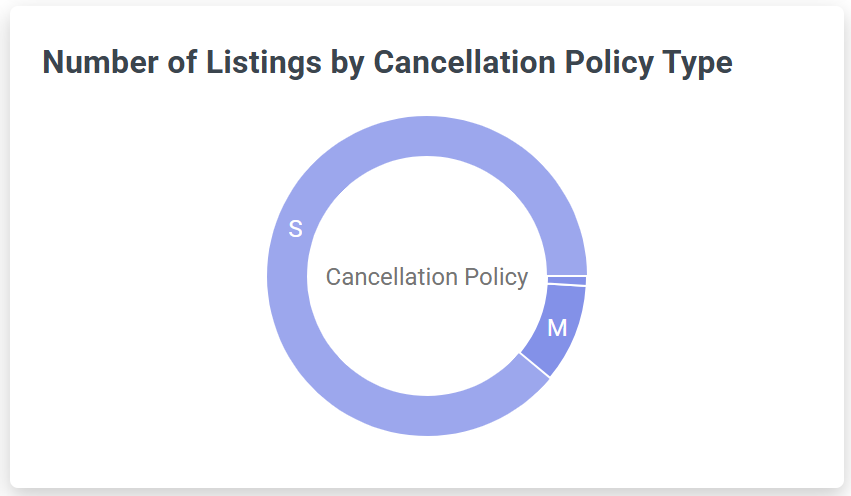
To further tune up your strategy from the get-go, you can check out the type of Airbnb cancellation policy that dominates the market.
Airbtics Market Overview: Airbnb Cancellation Policy in Aspen, CO, November 2025
Source: Airbtics app
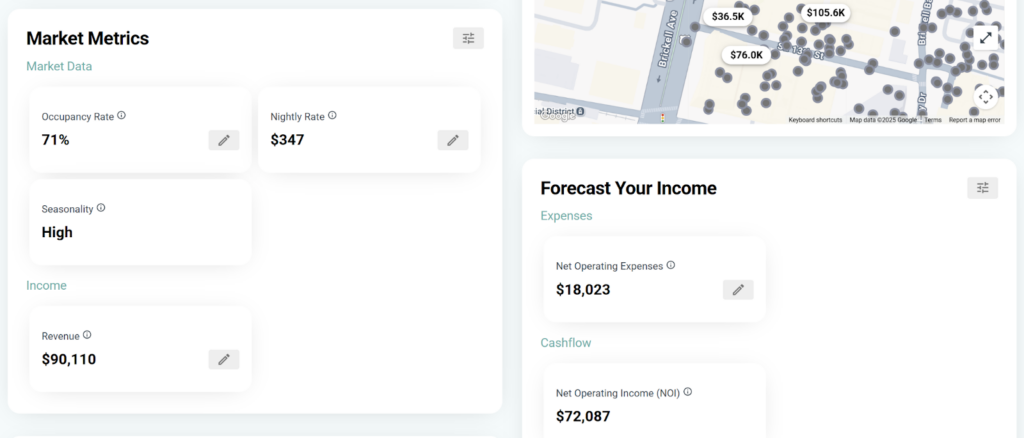
Importantly, Airbtics enables you to calculate the expected ROI of an Airbnb property. With the Airbtics Airbnb Calculator, you can simulate occupancy, nightly rates, and estimated cash flow based on actual market data.
Airbtics Airbnb Calculator: Miami, FL, November 2025
Source: Airbtics app
You can see 5-year cash flow and 10-year return rate to make sure that your investment performs well not only now but also in the future.
The analysis has a section dedicated to long-term rental performance to evaluate the viability and profitability of Airbnb monthly rentals.
This level of analysis helps you determine whether a long-term Airbnb strategy will outperform traditional short-term rentals in your chosen area—before making any investment decisions.
Finally, before buying an Airbnb to rent out on a monthly basis in any global market, you have to know what long-term and short-term rental regulations you face. That’s one more aspect of the investment process where you can lean on Airbtics.
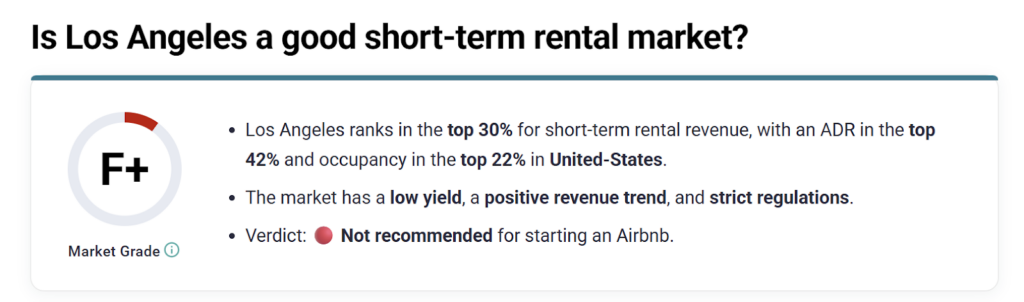
First of all, in the summary provided by the Market Overview Tool, you can see whether a location has Strict or Lenient Airbnb rules.
Airbtics Market Overview: Regulations in Los Angeles, CA, November 2025
Source: Airbtics app
Second, the website offers detailed information about the Airbnb rules in major markets regarding short-term rental licensing and permitting, maximum occupancy, maximum rental nights, and other typical regulations imposed by local authorities.
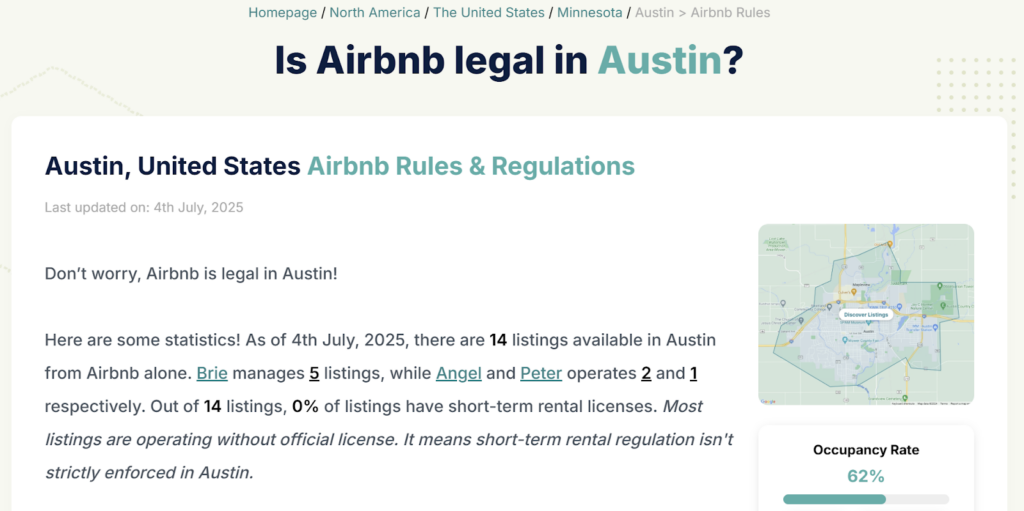
Airbtics Airbnb Rules: Austin, TX, November 2025