 Airbtics | Airbnb Analytics
Precise Short-term Rental Analytics
Airbtics | Airbnb AnalyticsBooking lead time is a simple, yet powerful short-term rental metric that reveals how far in advance travelers book in a particular market. This data helps Airbnb hosts and property managers understand guest behavior, anticipate demand, and optimize pricing strategies for maximum occupancy and revenue.
When you know your typical Airbnb booking lead time, you can make smarter decisions: From when to raise or lower prices, to how to schedule cleanings, adjust minimum stays, or plan promotions. It also helps you predict occupancy patterns, identify last-minute gaps, and improve cash flow forecasting.
In this guide, we’ll cover what booking lead time means, why it’s important in the vacation rental industry, how to calculate it, what influences it, and how to use it. We’ll also go over other performance metrics to help you improve your short-term rental strategy and maximize profitability.
Key Takeaways:
Booking lead time, also referred to as booking window, is the number of days between the date when a reservation is made and the guest’s check-in date. If someone books an Airbnb listing on May 1 for a stay starting May 15, the booking lead time is 14 days.
Why it matters: Knowing how far in advance guests usually book property like yours in the local market helps you tune prices, minimum stays, and promotions to capture demand at the right moment rather than racing to discount at the last minute or leaving money on the table too early.
A few days of difference in the typical booking window can shift your entire revenue plan.
Here’s why:
At its core, the booking lead time calculation is simple.
All you have to do is to follow this booking window formula:
Booking Lead Time (Days) = Check-In Date – Booking Date
How to calculate the booking lead time step by step:
Example
The average booking lead time = (14 + 31 + 2) / 3 = 15.7 days.
Average booking window for a market
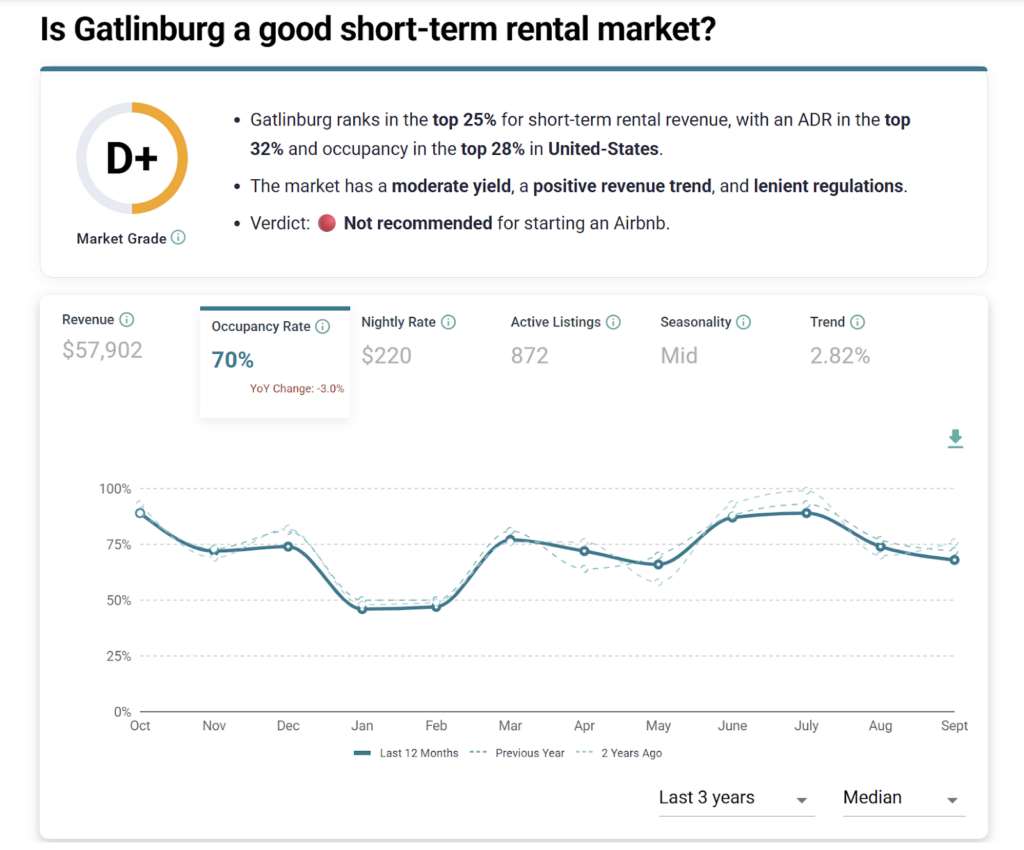
Market-level booking lead time can fluctuate throughout the year and year-on-year depending on seasonality, local demand patterns, and traveler behavior. For example, destinations that attract summer tourists often see bookings made months in advance, while urban markets or off-season periods may have much shorter windows as guests plan spontaneous trips.
External factors, such as new flight routes, major events, or even broader travel trends, can also shift booking patterns over time. The key is to monitor how your own market behaves each season and adjust your pricing and calendar strategies accordingly.
Pro tip: Use Airbtics’ market-level occupancy, ADR, seasonality, and supply trends to understand when demand typically spikes or lulls and then align your pricing rules with your observed lead time behavior.
The booking window is a moving target affected by a number of different factors in the short-term rental market.
Expect it to flex with these:
A tighter grip on your booking window doesn’t mean forcing guests to book earlier—it means earning the right bookings at the right time and right price.
Map when most of your bookings arrive for each month. If you typically fill 30-45 days out, set progressively higher “early planner” rates and then step down towards optimal fill thresholds.
If you fill inside 7-10 days, keep rates firm until that window opens, then adjust with clear discount rules, for instance, -5% at 10 days out if your occupancy rate is under 60%.
Airbnb’s own pricing research emphasizes learning the lead time distribution to price well.
Use calendar rules by lead time.
This preserves ADR and avoids one-night holes in your schedule.
If you depend on early bookings, consider Moderate payment policies or staged payments to encourage earlier commitments.
If you’re in a late-booking market, stricter terms might depress early demand. Test carefully or combine with limited-time perks for early planners.
“Reserve now, pay later” options can also pull demand forward. However, monitor no-pay and churn risks.
Don’t discount blindly in your Airbnb pricing strategy. Offer early-bird promotions (60+ days out) to capture planners and last-minute bundles (such as free parking and late checkout) when you hit your typical late window. Tie promos to local demand patterns revealed in Airbtics’ market seasonality data.
Seasonality Impact on Airbnb Occupancy Rate
Planners read thoroughly and compare. To make your Airbnb listing a better fit for their preferences, highlight Airbnb amenities, family readiness, pet-friendliness, workspace, parking, and cancellation clarity.
Meanwhile, spontaneous travelers just skim through the listing description. To optimize your listing for them, punch up 5 photos, an attention-grabbing Airbnb title, a mobile-friendly description with bullet points, and Instant Book settings.
Both groups respond to recent Airbnb reviews by guests and fresh, professional photos that emphasize the uniqueness of your short-term rental.
While booking lead time is a key metric to inform important decisions about the management of your vacation rental, it’s not the only data point to take into account.
Other major Airbnb data analytics to track alongside your booking window include:
Airbtics provides accurate, up-to-date data on all these key metrics and more, directly from Airbnb, Vrbo, and Booking.com. Sign up now for a free trial to find the best markets and top property types to invest in a short-term rental.
Practical workflow:
You don’t need a built-in booking lead time metric to use booking windows powerfully. Calculate it from your bookings in a matter of minutes, segment it by season and property, and let it guide your pricing steps across the calendar. Then, lean on Airbtics for the market intelligence that makes those steps precise – occupancy trends, ADR movements, RevPAR outcomes, and seasonality curves.
Markets change. In some periods, booking windows shrink; in others, they expand. Keep an eye on your own window monthly, compare it to Airbtics market trends, and keep rules flexible. That’s how hosts and property managers turn simple timing into predictable revenue.
Booking lead time is the number of days between when a guest reserves and when they arrive (check in) at your property. It’s also called the booking window. Understanding your typical window helps you time price changes, promotions, and minimum-stay rules effectively.
In practice, lead time for booking is calculated per reservation: Check-in date minus booking date. You can average this across a period, for example last 12 months and also segment by season or channel to see patterns you can act on.
There’s no single global number. Markets vary widely by season and property type. Some US datasets show averages of 25-30 days, but treat that as directional and compare against your local comps and seasons.
☐ Export last 12 months of bookings; compute per-booking lead time (days).
☐ Calculate average and median; segment by month/season and property type.
☐ Plot bookings vs days-to-arrival to see your booking curve.
☐ In Airbtics, review seasonality, ADR, occupancy, RevPAR, and supply for the same periods.
☐ Set rules by window: Early-planner rates and minimums; close-in discounts and shorter minimums if occupancy lags.
☐ Recheck monthly; adjust for events, policy changes, and shifting traveler behavior.